Blocked Gutters and Damp: A Worcester Homeowner's Guide
Your gutters are the most ignored part of your house, right up until the day they cause a proper mess. Most people never look at them. Then a patch of damp shows up on a bedroom wall and suddenly they matter a lot.
In a city as wet as Worcester, that day comes sooner than you'd think. The rain here gives blocked gutters plenty to go wrong with.
The quick answer: Blocked gutters send rainwater spilling down your walls instead of away from the house. In damp Worcester that leads to soaked brickwork, rotten timber, and interior damp. Regular gutter cleaning keeps the water moving and the walls dry.
1. Worcester gets more than its share of rain
Sitting in the Severn valley, Worcester catches plenty of wet weather rolling in off the west. The city knows flooding well too. The Severn burst its banks badly in 2007, and the low ground near the river floods most winters when the rain keeps coming.
All that water has to go somewhere. Your gutters are the first line handling the rain that lands on your roof, and there's a lot of it to shift here.
When they're clear, they do the job quietly. When they're blocked, the trouble starts fast.
2. What actually clogs a Worcester gutter
Two things fill gutters here more than anything else. The first is autumn leaves, and with all the mature trees around the city's parks and older streets, there's no shortage. The second is moss washed down off the roof.
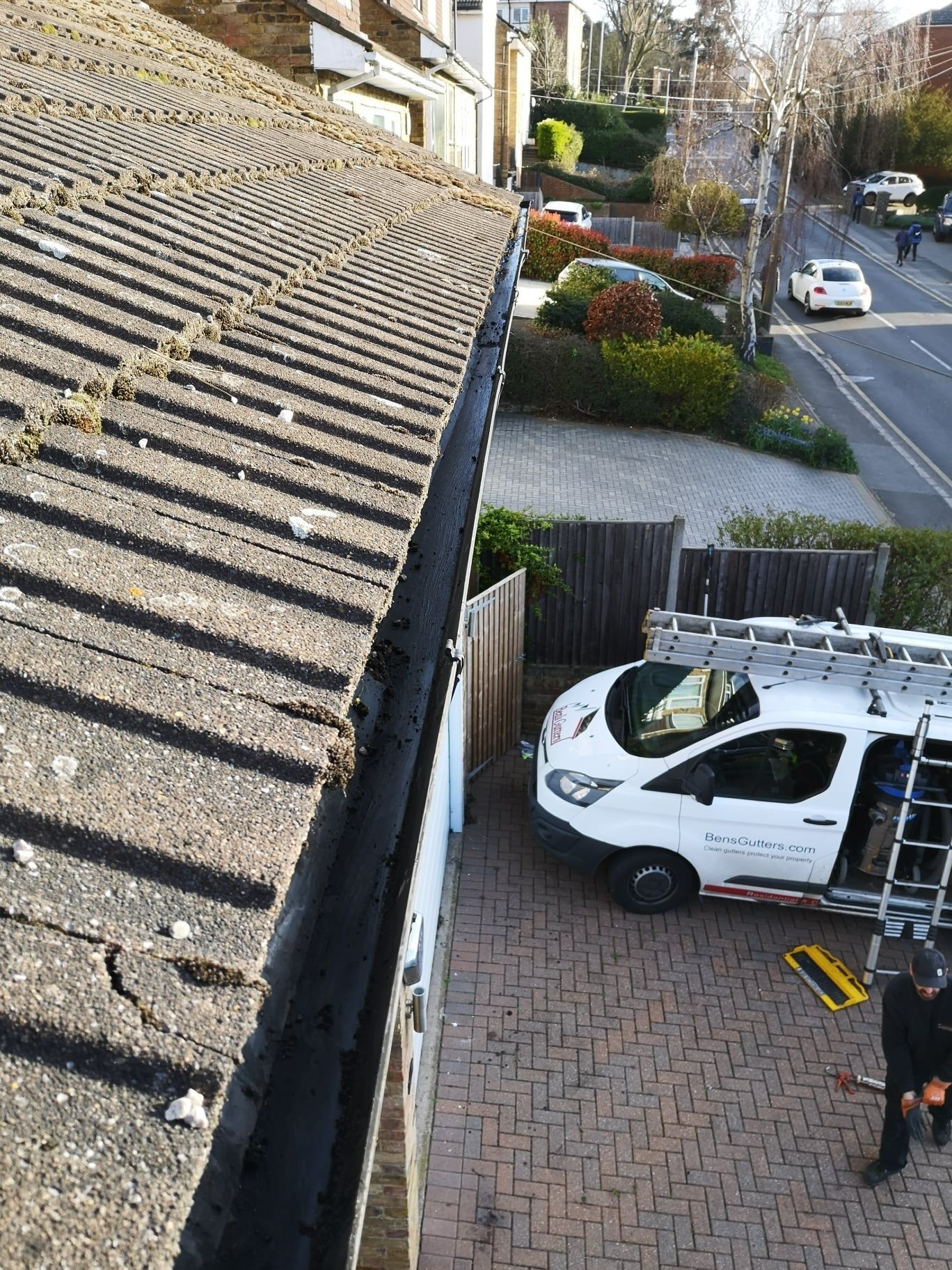
That second one catches people out. If your roof grows moss, and in Worcester's damp air most do, chunks of it break loose in the rain and settle in the gutter. It packs down into a soggy dam.
Add in grit off the tiles and the odd tennis ball, and the channel fills up. Water backs up behind it with nowhere to go.
3. How a blocked gutter turns into a damp wall
Here's the chain of events. Water can't get past the blockage, so it rises and spills over the front edge of the gutter. It runs straight down the wall below, over and over, every time it rains.
Brick and old mortar are porous. Soak them day after day and the water works its way through to the inside. That's when you get the tell-tale damp patch, the musty smell, the peeling paint in the corner of a room.
And it's worse where the water pools against the wall near the ground. Worcester's older brick homes really don't enjoy constant soaking.
4. The damage you don't see until it's expensive
Damp walls are the obvious problem. The hidden ones cost more. Overflowing water gets into fascia boards and roof timbers, and wet timber rots. Left long enough, that rot spreads into the structure holding your roof edge up.
Blocked gutters also let water sit against the wall right down at foundation level. In a wet winter that's the last thing an older Worcester property needs.
My honest take? Gutter cleaning is the cheapest insurance a homeowner can buy. Skip it for years and you're paying for timber and plaster instead.
5. Why moss on the roof and blocked gutters go together
People treat the roof and the gutters as two separate jobs. They're really not. A mossy roof feeds the gutters below it with a steady supply of debris every time it rains.
So clearing the gutters without dealing with the moss above is half a fix. The channel just fills again with the next batch washed down. It's worth sorting both.
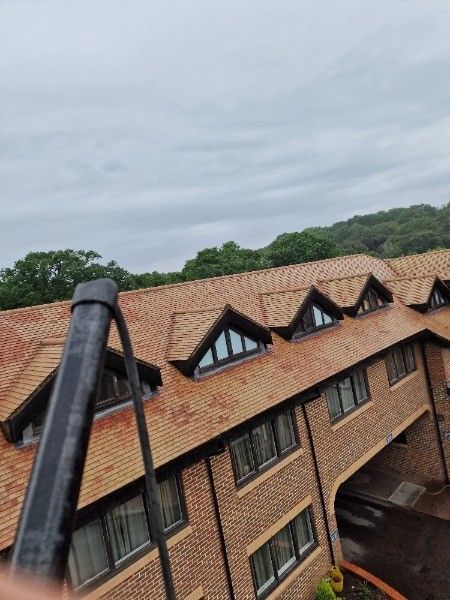
That's why roof cleaning and gutter cleaning so often make sense together, especially on the shaded, moss-heavy roofs common across the city.
6. How often Worcester gutters need doing
For most homes here, once a year is the baseline, usually late autumn once the leaves have finished dropping. That clears the summer's moss and the autumn leaf fall in one go, ready for the wet winter.
If your house sits under trees or your roof is badly mossed, twice a year is smarter. The more debris landing in the gutter, the faster it blocks.
The one thing you don't want to do is leave it for years. By then the damp has usually already started, and you're fixing walls instead of clearing leaves.
- Wet climate: Worcester's Severn valley setting and heavy rainfall push a lot of water through your gutters.
- Leaves and moss: falling leaves and moss washed off the roof are the two main things that clog gutters here.
- Overflow means damp: water spilling down the wall soaks porous brick and shows up as interior damp.
- Hidden rot: overflowing gutters rot fascia boards and roof timbers, which costs far more to fix.
- Clean roof and gutters together: dealing with roof moss stops the gutters filling straight back up.
Frequently Asked Questions
Can blocked gutters really cause damp inside my house?
Yes. When gutters overflow, water runs down the wall and soaks through porous brick and mortar, showing up as damp patches, musty smells and peeling paint inside.
How often should I clean my gutters in Worcester?
Once a year is the minimum, ideally in late autumn. If you're under trees or have a mossy roof, twice a year is a safer bet.
Why do my gutters block up so fast?
Usually a mix of fallen leaves and moss washing down off the roof. Worcester's damp air grows plenty of roof moss, which ends up in the gutter.
Should I clean the roof and gutters at the same time?
It often makes sense. Clearing the roof moss stops fresh debris washing straight back into freshly cleaned gutters.
What happens if I just ignore my gutters?
Over time you risk damp walls, rotten fascia boards and roof timbers, and water pooling at foundation level. All of it costs far more than a routine clean.
Worried your gutters are causing damp?
Ben's Roof Cleaning works across Worcester and Worcestershire, with over 15 years of experience. Get in touch or call 01905 675568
for a free, no-obligation quote.
Clear gutters are the quiet hero of a dry house
Nobody gets excited about gutters. But in a rain-soaked city sat beside the Severn, they're doing more to keep your home dry than almost anything else on the outside of it.
Give them a look before winter, clear out the leaves and moss, and deal with the roof feeding them. Your walls will thank you for it.